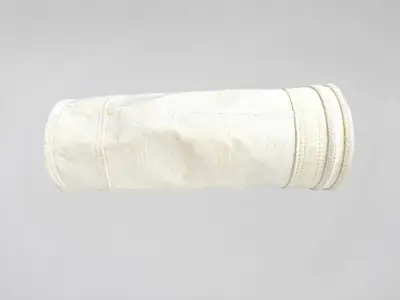
Why Choose Specialized Filter Bags for Blast Furnace Gas?
Blast furnace gas is a byproduct of modern ironmaking processes. Its main components are CO (25%), CO₂ (15%), and N₂ (55%), and it contains small amounts of H₂, O₂, and CH₄. It has a low calorific value; to improve the efficiency of secondary energy utilization, it must undergo fine filtration.
Our company uses an 80-count glass fiber base fabric, supplemented by a surface layer composed of a blend of ultra-fine glass fiber staple fibers and P84 fibers. This combination integrates the high strength, high-temperature resistance, corrosion resistance, and low shrinkage of glass fiber with the fold resistance, acid and alkali resistance, and strong cohesion of the ductile P84 fibers. The three-dimensional microporous structure formed by the blended fiber layer meets the operational requirements of blast furnace gas—which has a low ash content and demands high filtration precision—and ensures a long service life. Dry dust collection filter bags for blast furnace gas represent a significant technological innovation in the pursuit of energy conservation, emissions reduction, and clean production.
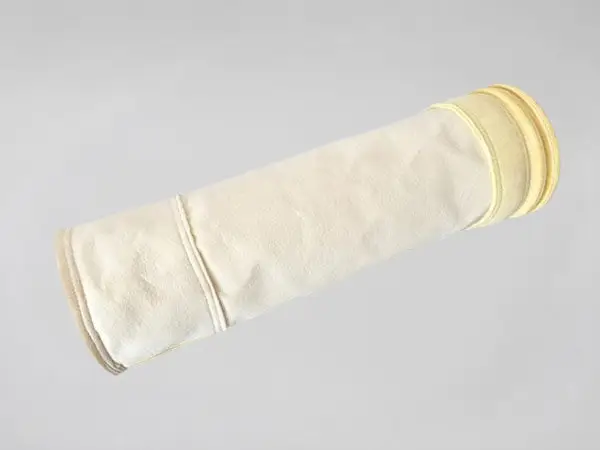
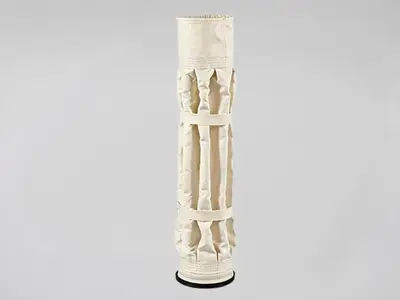
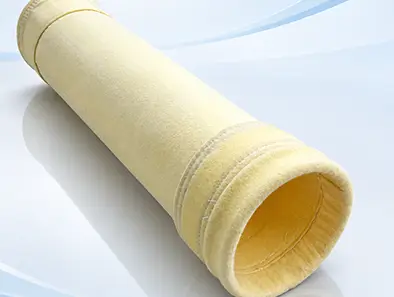
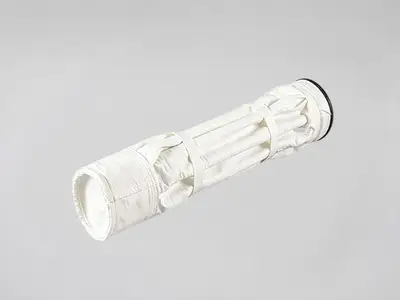
Specialized blast furnace gas filter bags are a high-performance composite product that is resistant to high temperatures, corrosion, acids, alkalis, and abrasion. They are a new type of high-temperature filter media developed for dry dust removal in blast furnace gas systems. By adding P84 fibers to a glass fiber needle-punched felt base, the filter media achieves a denser felt layer and enhanced fiber interlacing, enabling it to handle higher filtration air velocities. P84 fibers feature a three-lobed cross-section, creating a high surface area coefficient that increases the probability of dust capture. This unique cross-sectional shape causes most dust particles to concentrate on the filter media’s surface, making it difficult for them to penetrate the internal pores and clog the media, thereby reducing resistance and increasing filtration velocity.
Glass Fiber Base Fabric + P84 Top Layer + PTFE-Coated Anti-Static Composite Filter Media (Standard for Large and Medium-Sized Blast Furnaces)
Structure: Alkali-free glass fiber skeleton base fabric + P84 polyimide surface layer + PTFE coating Basis weight: 850–900 g/m²
Basic Performance:
- Long-term continuous temperature: ≤240°C; instantaneous peak: 280–300°C
- Highest temperature resistance, withstanding sudden overheating in blast furnaces and significantly reducing the risk of filter bag burnout
- Excellent resistance to weak acids and H₂S; exceptional thermal dimensional stability ensures long filter bags (6–8 m) are resistant to stretching and deformation ✅ Advantages
Advantages:
- Resistance to instantaneous high temperatures is the standout feature, making it the preferred choice for large blast furnaces;
- P84 fibers offer superior hydrolysis resistance compared to Fluoroflex; the PTFE coating prevents ash embedding and ensures stable ash removal;
- Superior abrasion resistance compared to pure glass fiber woven fabric; permanently effective anti-static properties;
- Stable operating pressure drop protects TRT blades; standard equipment for mainstream large blast furnaces.
Applications: Large and medium-sized blast furnaces with a capacity of 1,000 m³ or more, projects with significant furnace temperature fluctuations, and projects requiring extended service life.