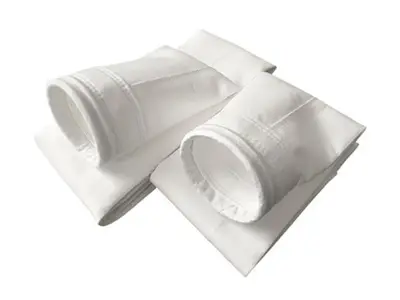
Why Choose Metas Needle-Punched Filter Felt for Industrial Filtration?
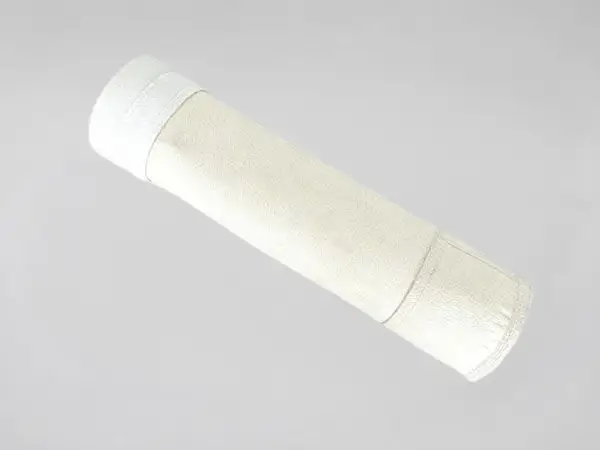
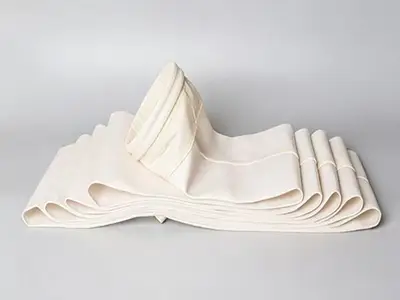
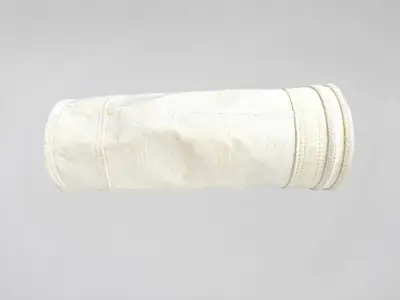
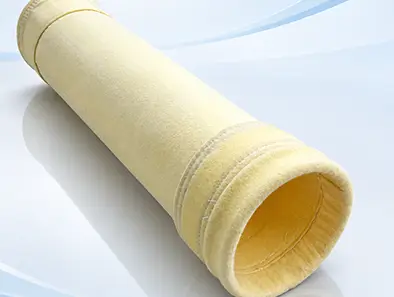
METAMAX needle-punched filter felt is a high-temperature-resistant filtration material produced by our company in accordance with international standards, using METAMAX fibers manufactured by DuPont Teijin Fibers, Inc. of the United States.
Characteristics of METAMAX filtration material:
- Excellent dimensional stability: Remains stable under fluctuating temperatures of 210°C, with a thermal shrinkage rate of less than 1% at 250°C.
- Excellent fire resistance: Decomposition and carbonization begin at 400°C; the limiting oxygen index (LOI) is 30; it is non-self-igniting and does not promote combustion.
- Good chemical resistance: It is not significantly corroded by low-concentration acids and alkalis or most hydrocarbons, nor does it suffer significant corrosion from oxides.
Applications of Metas Filter Media:
- Blast furnace gas in the steel industry; rotary kilns in the cement industry; drying rotary kilns in the asphalt industry; and dust removal in the thermal power generation industry, among other fields.
Performance of High-Temperature-Resistant Aramid Needle-Punched Felt and Nomex Needle-Punched Felt:
1) Excellent Performance at High Temperatures
Aramid needle-punched felt can be used continuously at operating temperatures as high as 218°C (425°F) and can withstand even higher temperature fluctuations. However, to optimize the service life of the bag, it is recommended to maintain the continuous operating temperature at 204°C (400°F) or below, while ensuring minimal temperature fluctuations.
2) Flexural Strength and Abrasion Resistance
Aramid needle-punched felt exhibits good elastic tensile properties at room temperature, roughly comparable to those of polyester fiber; its toughness is particularly outstanding after aging at temperatures of 121°C (250°F) and above. The abrasion resistance of aramid needle-punched felt under conditions of 121°C (250°F) and above should be more than three times that of polyester fiber.
3) Effect of Humidity
Aramid performs well at higher operating temperatures and tolerates normal levels of moisture. The wear life predictions in the chart below are based on an assumption of 6–10% moisture content. Higher levels of moisture and temperature will shorten wear life. When operating in high-humidity environments, it may be worth considering reducing the temperature to extend wear life. For example, under conditions of 20% moisture content, lowering the temperature from 204°C (400°F) to 148°C (300°F) could increase operating time from 2,300 hours to 35,000 hours (a 15-fold increase).
4) Chemical Resistance
Aramid fibers are resistant to mild acids, weak alkalis, and most hydrocarbons. Additionally, customer feedback indicates that these fibers are unaffected by fluoride compounds present in exhaust gases from metallurgical and rock processing operations.
In acidic environments, aramid needle-punched felt should be evaluated to ensure the fibers exhibit satisfactory performance prior to insulation. Aramid needle-punched felt outperforms polyester materials in acidic environments at temperatures above the dew point.
Temperatures should be maintained above the dew point to minimize chemical corrosion of aramid filter bags and equipment. The system should be preheated before startup and dried before shutdown to reduce the risk of chemical erosion. When the gas stream contains acidic gases, the lowest safe operating temperature—which should be above the dew point—should be used to optimize the service life of the filter bags. Excessively high temperatures will accelerate the chemical erosion process.
5) Dimensional Stability
Aramid needle-punched felt filter bags are among the fiber products on the market with excellent dimensional stability. When aramid fibers are produced according to specifications and undergo post-treatment, their elongation rate does not exceed 2% even when used under operating conditions of up to 218 degrees Celsius (425 degrees Fahrenheit).
6) High-Temperature Resistance
Aramid materials are best suited for high-efficiency filtration systems where flue gas temperatures exceed 250 degrees Fahrenheit or where instantaneous temperature peaks exceed 250 degrees Fahrenheit. In high-temperature flue gas filtration systems, aramid needle-punched felt filter media requires a smaller filtration area than glass fiber filter media to handle the same flue gas volume and achieve the same filtration efficiency.
Applications of Metas Filter Media
Blast furnace gas in the steel industry; rotary kilns in the cement industry; drying rotary kilns in the asphalt industry; and dust removal in the thermal power generation industry, among other fields.