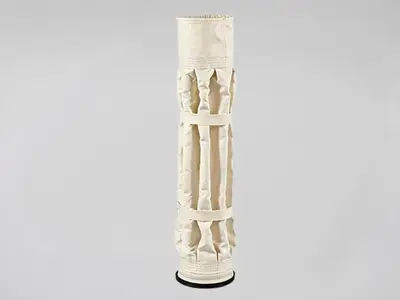
Anti-static Coated Filter Bags Introduction
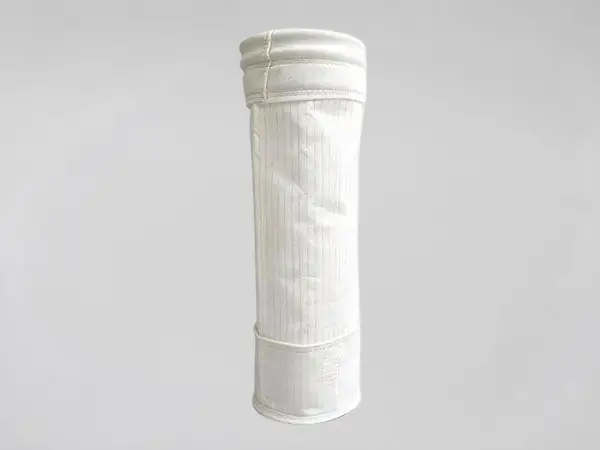
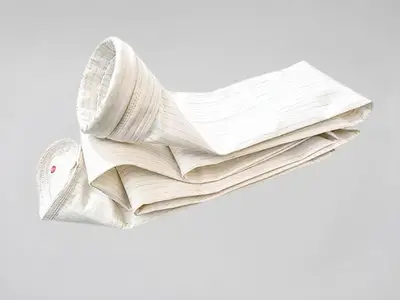
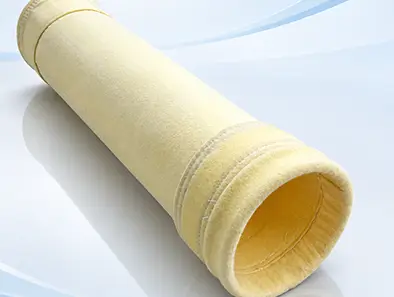
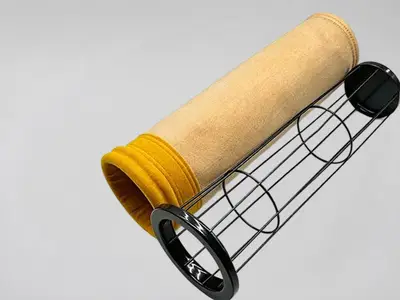
Anti-static coated filter bags are manufactured by incorporating conductive fibers into the warp threads of a polyester needle-punched felt base fabric or by blending conductive materials into the fibers, and then applying a microporous PTFE coating. This process achieves both highly efficient surface filtration and provides the filter media with excellent anti-static properties. The smooth PTFE membrane on the surface ensures easy dust release, high filtration efficiency, and stable operating resistance, while the addition of conductive fibers in the base fabric effectively dissipates static electricity, preventing the risk of fire or explosion caused by charge buildup. This product typically operates at continuous temperatures not exceeding 130°C and can withstand instantaneous temperatures of up to 150°C. It is primarily suitable for industries prone to static electricity and explosion risks—such as those handling flour, coal dust, and chemical dust—as well as operating conditions in the steel, cement, and metallurgy sectors that require both explosion protection and high-precision dust removal.
Polyester (PET) needle-punched felt, with conductive fibers (carbon fibers / stainless steel staple fibers) uniformly blended into the fiber matrix to form a continuous conductive network; the surface is thermally laminated with a layer of microporous PTFE film.
Two core functions combined:
Anti-static (explosion-proof safety): Rapidly dissipates static electricity generated by friction, preventing static sparks from igniting combustible dust;
PTFE coating: Provides surface filtration—unlike the deep filtration of ordinary needle-punched felt—to intercept ultrafine dust.
Two mainstream conductive processes:
① Blended anti-static: Conductive staple fibers are blended throughout the fiber mass;
② Striped anti-static: Conductive filaments are embedded in the base fabric (offering better stability)
Anti-static safety performance (key explosion-proof indicators)
Surface resistivity: 10⁶–10⁹ Ω (range required by national standards for explosion-proof dust collection) >10⁹ Ω: Anti-static failure; <10⁶ Ω: Risk of electrostatic sparks.
Rapid electrostatic dissipation; filter bags are reliably grounded in conjunction with the dust collector housing to eliminate static buildup;
Note: Anti-static filter media alone is insufficient; the entire dust collection system must be reliably grounded.
Filtration and Dust Removal Performance (The Greatest Advantage of Membrane Coating)
Extremely high filtration efficiency: ≥99.99% for dust particles ≥0.3 μm; outlet emissions can be stably controlled at ≤5 mg/m³, meeting ultra-low emission standards; ordinary, uncoated anti-static felt has low initial efficiency and relies on the formation of a dust layer.
Surface filtration prevents filter bag clogging: Dust remains only on the outer surface of the PTFE membrane and does not penetrate the filter felt; thorough cleaning ensures stable pressure drop during long-term operation. Conventional filter media are prone to dust embedding in the felt, causing continuous increases in resistance.
PTFE film is non-stick and hydrophobic, ensuring excellent dust cake release; compared to standard filter media, it is less prone to caking and bag clogging under high-humidity and slight condensation conditions; can be combined with triple-protection treatment for water, oil, and dust repellency.
Disadvantages: Initial operating pressure drop is higher than that of uncoated filter media; prolonged exposure to sharp, hard dust particles poses a risk of film abrasion and rupture.
Summary of Advantages and Disadvantages
Advantages
- Permanently anti-static, meeting explosion-proof standards for combustible dust;
- Highly efficient capture of ultrafine dust, achieving ultra-low emissions;
- Excellent dust-cleaning performance, stable pressure drop, and extended filter bag service life;
- Wear-resistant with good dimensional stability; pulse-jet dust collectors remain resistant to deformation during long-term use;
- PTFE film is corrosion-resistant and non-hygroscopic, suitable for most industrial dusts at ambient temperatures.
Disadvantages
- The membrane is prone to wear and tear when the inlet air contains a large amount of sharp, hard particles;
- Air permeability is slightly lower, resulting in higher system resistance at equivalent filtration air velocities and a slight increase in fan energy consumption;
- Cannot be used at temperatures exceeding 130°C (upper limit of the polyester substrate); PPS or aramid anti-static coated felt must be selected for high-temperature applications.