
10

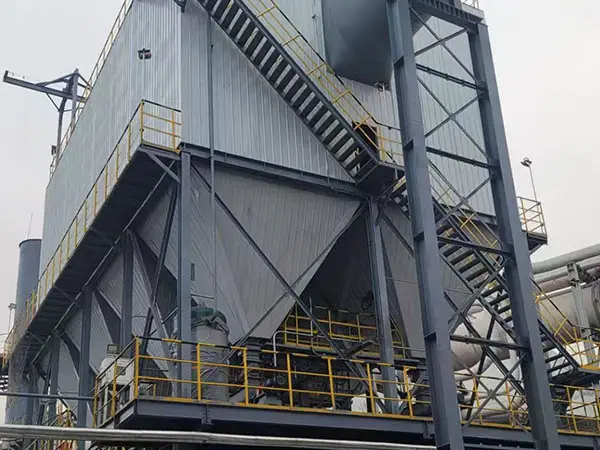
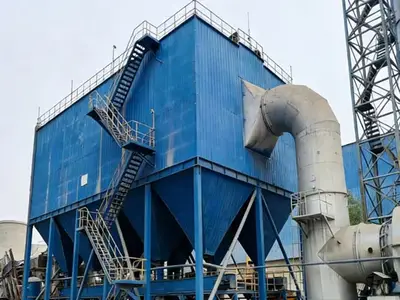
Circular Baghouse Dust Collector

Designed for industrial dust applications characterized by high concentrations, a tendency toward condensation, and significant fluctuations in airflow. Featuring a circular-shaped cylindrical design combined with pulse-jet cleaning technology, it saves 15% to 25% in floor space compared to rectangular designs while providing the same filtration area. Additionally, the housing distributes stress evenly and offers exceptional resistance to both positive and negative pressures.

Customization Service:
Specifications and dimensions can be customized according to customer requirements.

Circular Baghouse Dust Collector Overview

A circular baghouse dust collector is a dedicated industrial dust collection system designed for circular material distribution points in industries such as cement, lime, mining, metallurgy, power generation, and bulk material handling. During material feeding, distribution, and transfer, large amounts of airborne dust are released due to falling materials and air displacement. This dust collector captures and filters dust directly at the source, helping facilities maintain cleaner production environments, reduce material loss, and comply with increasingly stringent environmental regulations.

Designed for continuous industrial operation, the system combines optimized airflow design, high-efficiency filter media, and automatic pulse-jet cleaning technology to deliver stable performance even under high dust concentrations and fluctuating operating conditions.

Working Principle

The operating principle is based on source capture, filtration, and automatic filter cleaning, allowing the system to maintain high dust collection efficiency with minimal maintenance.

Dust Collection at the Source

  • As bulk materials enter the ring distributor, falling material creates dust clouds and displaced air. A specially designed hood or enclosed collection chamber captures this dust before it escapes into the surrounding workspace.
  • The induced draft fan generates negative pressure, drawing dust-laden air into the dust collector through the inlet duct.

Dust Filtration

  • Once inside the collector, airflow slows down, allowing larger particles to settle into the hopper by gravity.
  • The remaining fine dust passes through high-performance filter bags or filter cartridges. Dust particles are trapped on the filter surface, while clean air flows through the filter media and exits the system through the clean-air chamber.
  • High-quality filter materials maintain excellent filtration efficiency while keeping pressure drop low, ensuring stable airflow throughout long production cycles.

Automatic Pulse-Jet Cleaning

  • As dust accumulates on the filter surface, differential pressure gradually increases.
  • The pulse-jet cleaning system automatically releases short bursts of compressed air through blow pipes and venturis. These high-energy air pulses rapidly expand the filter bags, dislodging accumulated dust without interrupting system operation.
  • The removed dust falls into the collection hopper for recycling or disposal, allowing the collector to maintain consistent filtration performance and extended filter life.

Continuous Clean Air Discharge

  • After filtration, clean air is discharged through the exhaust fan or returned to the production area where local regulations permit.
  • Continuous airflow maintains negative pressure inside the material distribution system, preventing secondary dust emissions and improving workplace visibility.

Technical Specifications of Major Components

Filter Bags

  • Material: Polyester
  • Quantity: 384 per unit
  • Dimensions: φ130 × 2200 mm
  • Warps Tensile Strength: 1600 N/25 mm
  • Wefts Tensile Strength: 1400 N/25 mm
  • Service Life: 18 months

Pulse Valves

  • Model: DMF-Z-62S
  • Quantity: 6 per unit
  • Operating Voltage: DC 24 V
  • Operating Pressure: 0.4–0.6 MPa
  • Pulse Width: 0.2 s
  • Air Consumption per Pulse: 180 L
  • Service Life: 1 million cycles or three years
  • Manufacturer: Shanghai Baghouse Dust Collector Accessories Co., Ltd.

Cages

  • Quantity: 384 per unit
  • Specifications: φ125 × 2150 mm
  • The filter bag cages are manufactured using a single-step, multi-point automatic welding process and feature a galvanized surface. To facilitate installation, they employ an octagonal structure, ensuring excellent rigidity, strength, and dimensional accuracy. They remain distortion-free during long-term use, minimizing wear on the filter bags and extending their service life.
  • A Venturi tube is added to the upper opening of the filter bag cage. During pulse-jet cleaning, it acts as an ejector to increase the kinetic energy of the cleaning process, ensuring more thorough cleaning. It also prevents filter bags from being ruptured due to nozzle misalignment, thereby extending the service life of the filter bags.

Pneumatic Cylinder

  • Model: SC80x220
  • Quantity: 6 per unit
  • Operating Voltage: 24 V DC
  • Operating Pressure: 0.4–0.6 MPa

Star-Type Discharge Valve

  • Model: YJD-16A
  • Quantity: 1 per unit
  • Matching Motor: 1.5 kW
  • Speed: 42 r/min
  • Discharge Capacity: 16 L/r

Screw Conveyor

  • Model: LS315x5200
  • Quantity: 1 per unit
  • Conveying Capacity: 8 m³/h

Key Advantages

STEP 1

High Dust Collection Efficiency

Optimized airflow distribution and premium filter media effectively capture both coarse and fine particles, significantly reducing dust emissions.
STEP 2

Stable Operation Under Heavy Dust Loads

The system is designed for continuous operation in high-concentration dust environments commonly found in cement plants, mining facilities, and bulk material handling systems.

STEP 3

Automatic Cleaning with Minimal Downtime

Pulse-jet cleaning operates automatically according to differential pressure or preset intervals, reducing manual maintenance while maintaining consistent filtration performance.

STEP 4

Lower Operating Costs

Efficient airflow design minimizes system resistance and compressed air consumption, helping reduce energy usage and extend filter bag service life.

STEP 5

Flexible Engineering Design

Ring material distribution dust collectors can be customized according to equipment layout, airflow volume, dust characteristics, operating temperature, and installation space, ensuring optimal dust control for different production lines.

Control System

The control system of a circular baghouse dust collector serves as the operational "brain" of the equipment, typically centered around a Programmable Logic Controller (PLC) that integrates dual-mode (differential pressure and timed) pulse cleaning, real-time temperature and negative pressure monitoring, and main fan interlocking controls. By continuously monitoring the pressure drop across the filter bags, it triggers sequence-specific pulse jet cleaning only when designated thresholds are met—effectively preventing bag damage or clogging from over-pressure while eliminating compressed air waste from unnecessary cleaning cycles, thereby ensuring stable operation and optimal filtration efficiency even under severe high-temperature or heavy-dust loading conditions.
FAQs about Circular Baghouse Dust Collector

Similar Models