STEP 1
High Dust Collection Efficiency
Advanced filter media effectively captures fine particulate matter, helping facilities achieve low emission levels while maintaining stable airflow.
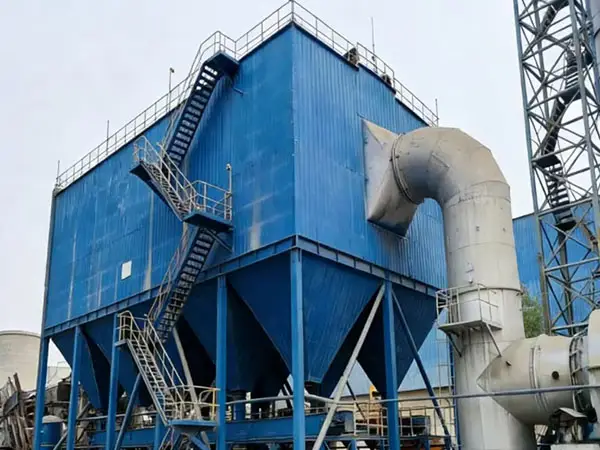
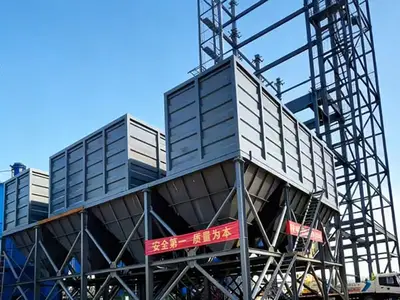
A batching plant dust collector is an industrial environmental protection device specifically designed to capture suspended dust (such as cement, fly ash, mineral powder, and aggregate dust) generated during the batching process of concrete, asphalt, or dry-mix mortar. At high-concentration dust-generating points such as cement feeding, aggregate metering, and mixer feeding, the dust collector uses negative pressure suction and high-efficiency filtration to ensure that the exhaust concentration meets national and international environmental standards (typically ≤ 10 mg/Nm³), while simultaneously allowing the recovered dust to fall directly back into the batching system, achieving zero material waste.
A batching plant dust collector is an industrial filtration system designed to capture airborne dust generated during raw material storage, conveying, weighing, mixing, and loading operations. It helps maintain a clean production environment, reduces material loss, protects equipment, and ensures compliance with environmental emission standards.
Widely used in cement plants, concrete batching plants, mining facilities, chemical processing, and bulk material handling industries, batching plant dust collectors provide continuous, reliable dust control even under high dust concentrations and demanding operating conditions.
The dust collection process is based on efficient air filtration and automatic cleaning technology. The system continuously removes dust from process air while maintaining stable airflow and low operating resistance.
Dust-Laden Air Enters the Collector
During batching, conveying, or material transfer, negative pressure created by the fan draws dust-laden air into the dust collector through the inlet duct. Larger particles lose velocity and settle into the hopper due to gravity, reducing the filtration load on the filter media.
Fine Dust Is Captured by Filter Bags
The remaining fine particles pass through the filter bags. As air flows from the outside to the inside of the filter media, dust particles are trapped on the surface, while clean air passes through the fabric and exits the system.
This surface filtration mechanism provides high collection efficiency while maintaining excellent airflow performance.
Automatic Pulse Jet Cleaning
As dust accumulates on the filter bags, the system monitors the pressure difference across the filters. When the preset differential pressure is reached, a pulse jet cleaning system releases a short burst of compressed air into each filter bag.
The sudden reverse airflow expands the bag momentarily, dislodging the dust cake without interrupting normal filtration. The removed dust falls into the hopper for collection or recycling.
Clean Air Is Safely Discharged
After filtration, clean air is discharged through the outlet fan or returned to the production area where regulations permit, improving workplace air quality while reducing environmental emissions.
Filter Bags
Pulse Valves
Filter Cages
Air Cylinder
Star-Type Discharge Valve
Collective Screw Conveyor
Discharge Screw Conveyor
We offer customized control systems to meet different plant requirements, including PLC control, touchscreen HMI, variable-frequency fan control (VFD), remote monitoring, and IoT-enabled smart diagnostics. Each system is configured according to your airflow capacity, process conditions, and automation requirements, delivering reliable