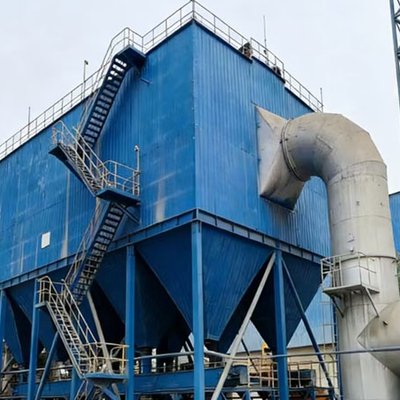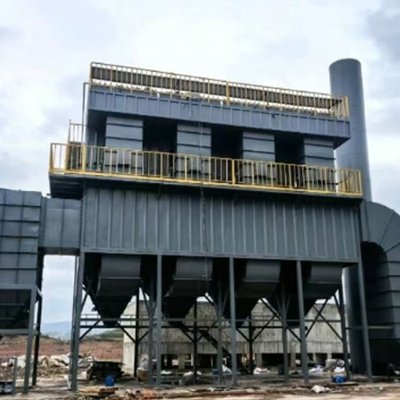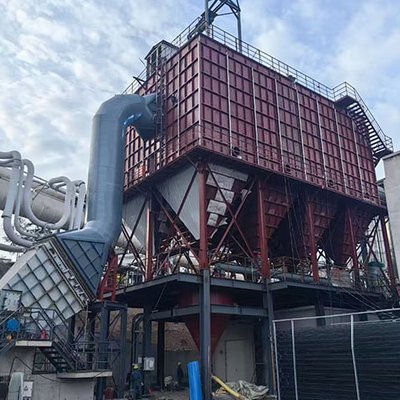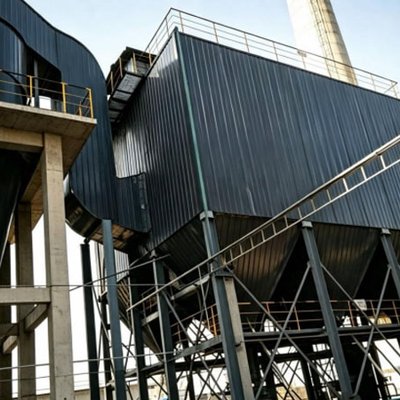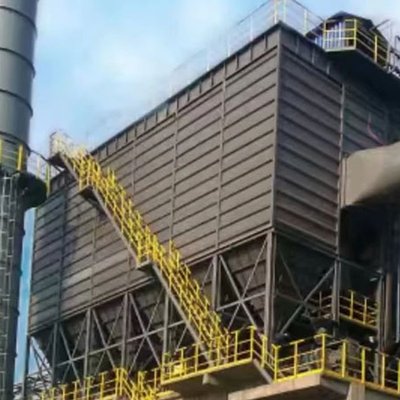
In modern industrial production, efficiently managing dust emissions, complying with environmental regulations, and safeguarding employee health are top priorities for every enterprise. Thanks to their exceptional filtration efficiency and stable operational performance, low-pressure pulse-jet bag filters have become the preferred choice for industries such as mining, metallurgy, building materials, and chemicals.
This article provides an in-depth look at the working principles, core architecture, and dust-cleaning logic of low-pressure pulse-jet bag filters, offering a comprehensive understanding of this high-efficiency dust removal solution.
I. Filtration Mechanism: From Dust-Laden Gas to Clean Air
Low-pressure pulse-jet bag filters utilize an efficient dust-hopper air inlet design, with the filtration process following a precise physical sequence:
Pre-separation and Flow Equalization Stage
Dust-laden gas enters the dust hopper through the inlet. Here, the system's built-in airflow distribution mechanism plays a crucial role:
Natural Sedimentation: As the airflow velocity drops suddenly, large dust particles settle naturally due to gravity and fall directly into the hopper.
Flow Guidance and Equalization: A flow-guiding system directs the remaining fine dust, ensuring the airflow enters the filtration zone (middle chamber) evenly and preventing direct impingement on the filter bags.
High-Precision Filtration Stage
The unit features a tube sheet; filter bag assemblies are precisely sealed to this sheet using spring-loaded snap rings, effectively dividing the collector into a "dust-laden zone" (middle chamber) and a "clean zone" (upper chamber).
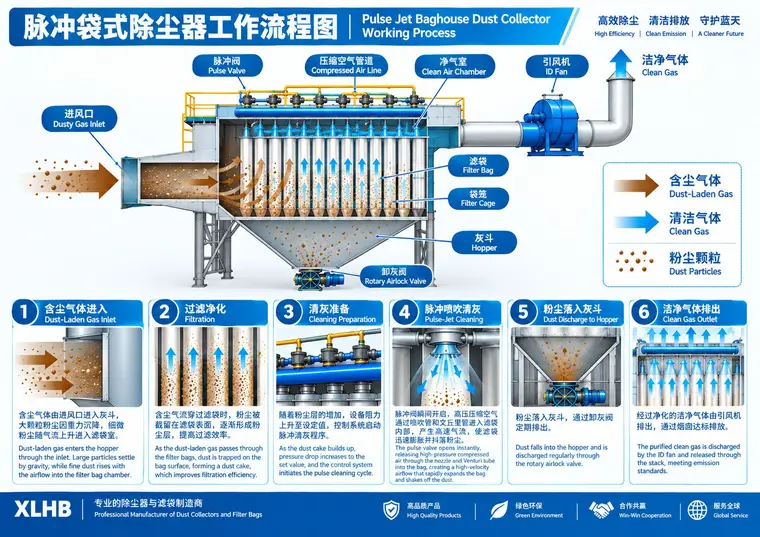
Dust Interception: Under negative pressure, dust-laden gas passes through the filter bags. Dust is efficiently trapped on the outer surface of the bags, forming a dust cake.
Compliant Emission: The filtered, clean gas enters the upper chamber and is ultimately discharged into the atmosphere via the main exhaust duct.
II. Core Technology: Intelligent Pulse-Jet Cleaning System
As filtration continues, the dust layer on the filter bags thickens, causing the equipment's resistance to rise. To ensure the dust collector consistently operates at peak performance, low-pressure pulse-jet technology serves as the vital mechanism for maintaining system efficiency.
Dust Cleaning Mechanism Components
The system consists of an air header (air reservoir), blowpipes, solenoid pulse valves, and a PLC control system. A blowpipe is positioned above the outlet of each row of filter bags, with nozzles aligned directly with the center of the bags.
Automated Dust Cleaning Logic
The equipment supports either timed control or differential pressure-based control (with a manual mode option):
Pulse Triggering: When a preset time interval or pressure drop value is reached, the PLC issues a command to open the solenoid pulse valve.
Instantaneous Expansion: Compressed air is injected, inducing an airflow several times its own volume to enter the filter bag within a very short timeframe.
Oscillation and Detachment: The filter bag undergoes rapid expansion and shock vibration from top to bottom; combined with the outward-directed reverse airflow, the dust layer adhering to the bag's surface quickly detaches and falls into the dust hopper.
Process Flow Diagram
To visualize the operating logic more clearly, the process is simplified as follows:
[Main Filtration Process]
Dust-laden gas → Dust collection duct
Intermediate chamber (airflow distribution and pre-separation)
Filter bag filtration (dust trapped on the exterior)
Clean air enters interior → Upper plenum
Clean air outlet → Discharge meeting emission standards
[Dust Cleaning Sub-process]
Pressure drop increases (cleaning conditions met)
Control system sends signal → Solenoid pulse valve opens
Compressed air injection → Secondary airflow induced
Filter bag expands and vibrates → Dust detaches and falls into hopper
Filtration resumes (cycle repeats)
Why Choose a Low-Pressure Pulse Bag-Type Dust Collector?
As experts in environmental protection equipment, we recommend considering the following technical advantages during selection:
High-Efficiency Tube Sheet Sealing: Uses spring-loaded expansion ring connections to ensure absolute isolation between the dusty gas chamber and the clean air chamber, resulting in a negligible dust leakage rate.
Matrix-Style Maintenance Platform: The tube sheet serves as both a partition wall and a maintenance platform; the matrix layout of the circular filter bags makes replacement and maintenance highly convenient.
Energy Efficiency and Low Consumption: Compared to high-pressure injection systems, low-pressure pulse technology significantly reduces compressed air consumption and extends the service life of the filter bags. Intelligent PLC Control: Dust cleaning frequency can be adjusted based on actual operating conditions, ensuring maximum dust removal efficiency with minimal energy consumption.
Conclusion
The low-pressure pulse bag dust collector is more than just a piece of environmental protection equipment; it is a vital asset for enterprises aiming to achieve green production and optimize process workflows. Understanding its operating principles helps enterprises manage and maintain the equipment more effectively during daily operations.
If you are looking for customized industrial dust collection solutions or need advice on equipment selection tailored to specific operating conditions, please feel free to contact our team of professional engineers.