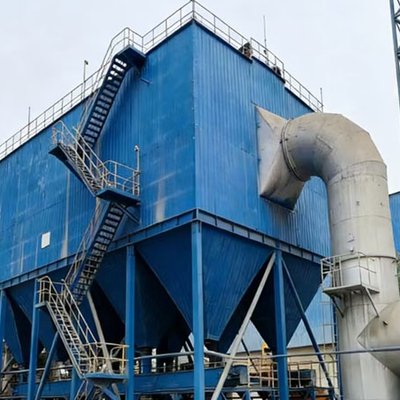
A pulse jet baghouse is one of the most effective dust collection systems used in cement plants, steel mills, foundries, power stations, chemical facilities, and many other industrial applications. Under normal operating conditions, the system maintains a stable differential pressure (DP) that allows efficient dust filtration while minimizing energy consumption.
When differential pressure begins to rise beyond the recommended operating range, the entire filtration system becomes less efficient. The fan consumes more power, airflow decreases, dust collection performance deteriorates, and filter bags experience unnecessary mechanical stress. If operators fail to identify the root cause promptly, prolonged high pressure drop can shorten filter bag life, increase maintenance costs, and even force an unexpected production shutdown.
Why High Pressure Drop Should Never Be Ignored
Instead of replacing filter bags immediately, maintenance teams should perform a systematic inspection. In many cases, high pressure drop results from operational issues rather than worn filter media. This guide explains how to troubleshoot the problem step by step and restore the baghouse to optimal performance.
Step 1: Verify Whether the Differential Pressure Reading Is Accurate
Before inspecting the baghouse itself, technicians should confirm that the pressure reading is reliable.
Many facilities begin troubleshooting mechanical components only to discover that the differential pressure transmitter was providing inaccurate data. Dust accumulation inside sensing lines, damaged tubing, loose fittings, or an improperly calibrated transmitter can all generate false readings.
Maintenance personnel should inspect the pressure ports, clean blocked impulse lines, verify tubing connections, and compare the transmitter reading with a calibrated portable pressure gauge. If the measurements differ significantly, recalibration or replacement of the instrument may solve the issue without additional maintenance.
Reliable monitoring is the foundation of effective troubleshooting.
Step 2: Review Recent Operating Changes
A sudden increase in pressure drop often coincides with a change somewhere in the production process.
Operators should review recent operating records and determine whether any of the following conditions have changed:
Dust loading has increased.
Production capacity has been expanded.
Raw materials have changed.
Gas temperature or humidity has shifted.
New equipment has been connected to the dust collection system.
Fan operating speed has been adjusted.
Even relatively small process changes can significantly affect filter loading and airflow resistance. Identifying these changes early helps narrow the range of possible causes.
Step 3: Inspect the Pulse Cleaning System
The pulse cleaning system is responsible for removing accumulated dust from the filter bags. If it fails to clean the bags effectively, dust cake thickness increases rapidly, causing differential pressure to rise.
Technicians should inspect every major component of the cleaning system, including:
Compressed air pressure
Air receiver tank
Pulse valves
Solenoid valves
Blow tubes
Nozzles
Pulse controller
Compressed air pressure should remain within the equipment manufacturer's recommended range. Insufficient air pressure reduces cleaning intensity, while excessive pressure can damage filter bags and shorten their service life.
Technicians should also listen for leaking pulse valves. Continuous air leakage not only wastes compressed air but also weakens cleaning performance throughout the system.
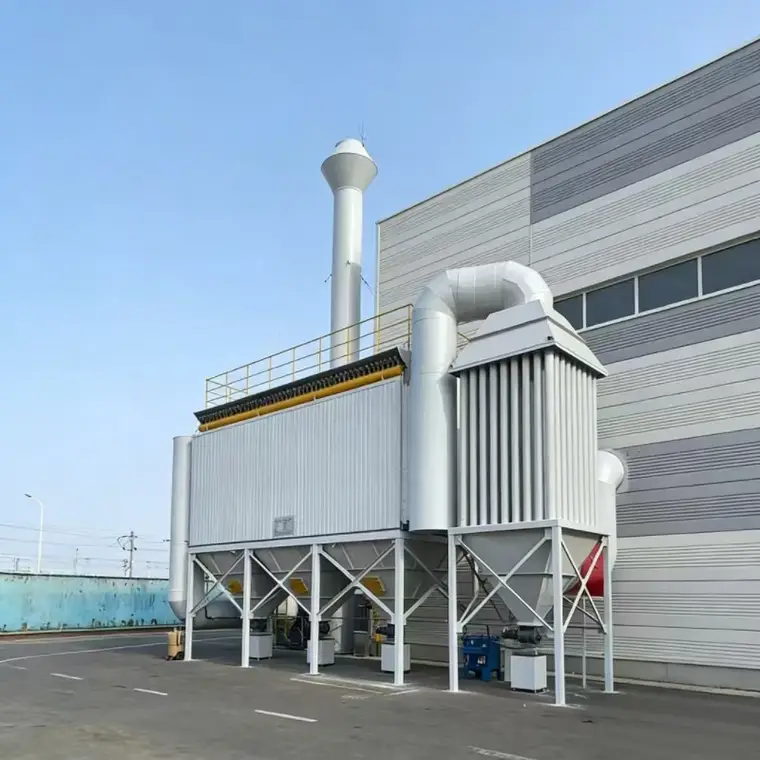
Step 4: Examine the Condition of the Filter Bags
Filter bags are the heart of every pulse jet baghouse. Their condition directly determines filtration efficiency and operating resistance.
During scheduled maintenance, technicians should inspect representative filter bags throughout the collector instead of examining only the bags near the access door.
Common problems include:
Heavy dust buildup
Moisture-induced caking
Oil contamination
Chemical attack
Surface glazing
Mechanical abrasion
Torn filter media
Dust that cannot be removed by pulse cleaning usually indicates that the filter media has become blinded. In this situation, cleaning efficiency decreases while differential pressure continues to rise.
If only a small number of bags are damaged, replacing those individual bags may restore normal performance. However, if a large percentage of the bags show similar deterioration, replacing the complete filter set is often the more economical long-term solution.
Step 5: Check for Moisture and Condensation
Moisture is one of the most common causes of persistent high pressure drop.
When process gas cools below its dew point, condensation forms inside the baghouse. Wet dust adheres tightly to the filter media and gradually develops into a dense dust cake that pulse cleaning cannot easily remove.
Maintenance personnel should inspect the system for signs of:
Water droplets
Damp dust deposits
Rust formation
Corrosion
Wet filter bags
Possible sources of moisture include leaking ductwork, insufficient insulation, process upsets, cooling air infiltration, and startup or shutdown procedures that allow condensation to develop.
Correcting the moisture source is essential. Replacing filter bags without eliminating condensation will only result in recurring problems.
Step 6: Evaluate Dust Characteristics
Not all industrial dust behaves the same way.
Some dusts release easily during pulse cleaning, while others naturally form dense deposits that increase filtration resistance.
Engineers should evaluate whether the dust has become:
Sticky
Hygroscopic
Fibrous
Extremely fine
Electrostatic
High in oil content
Changes in raw materials, additives, or production processes often alter dust characteristics without immediately attracting attention.
If dust properties have changed permanently, the existing filter media may no longer provide optimal performance. Selecting a different filter material or applying a specialized membrane coating may significantly reduce pressure drop while extending filter bag life.
Step 7: Confirm Airflow Is Within Design Parameters
Even a perfectly functioning baghouse will experience excessive pressure drop if airflow exceeds its design capacity.
Maintenance teams should verify:
Fan performance
Damper position
System airflow
Air-to-cloth ratio
Duct leakage
Additional equipment connected to the system
An overloaded collector forces more air through the available filter area, increasing filtration velocity and accelerating dust accumulation.
If production expansion has permanently increased airflow requirements, upgrading the baghouse or installing additional filtration capacity may become necessary.
Step 8: Inspect Hopper Dust Discharge
Dust that remains inside the hopper eventually interferes with normal filtration.
Technicians should inspect rotary valves, screw conveyors, drag conveyors, and discharge gates for blockages or mechanical failures.
If dust accumulates above the hopper level, re-entrainment occurs as gas flow carries settled dust back toward the filter bags. This additional dust loading increases pressure drop and reduces cleaning effectiveness.
Keeping the dust discharge system operating continuously helps maintain stable baghouse performance.
Step 9: Review Preventive Maintenance Records
Historical maintenance data often reveals recurring problems that may not be obvious during a single inspection.
Maintenance records should include:
Differential pressure trends
Pulse cleaning frequency
Compressed air consumption
Filter bag replacement history
Solenoid valve failures
Fan maintenance
Dust emission measurements
Trend analysis allows maintenance engineers to detect gradual performance degradation before it develops into an emergency shutdown.
Facilities that use predictive maintenance typically experience lower operating costs, longer filter life, and higher system reliability than those relying solely on reactive repairs.
Preventive Measures to Minimize Future Pressure Drop Problems
Once the root cause has been corrected, operators should implement preventive measures to maintain stable differential pressure over the long term.
Recommended practices include:
Monitor differential pressure continuously.
Maintain stable compressed air pressure.
Inspect pulse valves during scheduled maintenance.
Prevent condensation inside the collector.
Replace damaged filter bags before failures spread.
Keep hopper discharge equipment operating properly.
Verify airflow after any process modification.
Follow the manufacturer's preventive maintenance schedule.
A proactive maintenance strategy helps maximize filtration efficiency while reducing energy consumption and unexpected downtime.
Final Thoughts
High pressure drop in a pulse jet baghouse rarely results from a single component failure. More often, it develops from a combination of operating conditions, maintenance practices, dust characteristics, and process changes.
By following a structured troubleshooting procedure, maintenance teams can identify the actual cause instead of replacing components based on assumptions. Accurate diagnosis not only restores airflow and improves dust collection efficiency but also extends filter bag service life, lowers operating costs, and increases overall plant reliability.
For facilities that rely on continuous industrial dust collection, systematic inspection and preventive maintenance remain the most effective approach to keeping a pulse jet baghouse operating at peak performance year after year.